Menu
- Accueil
- Visiter
- Vivre
- Actions de l’AIP
- International
- Presse
- Contact
29 août 2018
La 20ème édition du Salon international du livre insulaire s’est tenue du 23 au 26 août dernier à Ouessant. Au programme, des rencontres et dédicaces, des projections de films, des concerts et plusieurs remises de prix. 47 livres traitant de l’insularité ont participé à la compétition cette année et ont été départagés par les 20 membres du jury.
Le Grand prix du jury : « Lettres de Lémurie », recueil de textes de 24 auteurs différents habitant des îles du sud-ouest de l’océan indien aux éditions DodoVole. Coordonné par Johary Ravaloson, déjà prix de la littérature générale du festival en 2016 pour « Vol à vif », ce premier numéro d’un magazine-livre fait référence à un continent englouti, réel ou fictif : la Lémurie,et recueille des textes de tous genre (théâtre, essais, aventures, science-fiction…)
Le Prix jeunesse : décerné à Daphné Buiron et Catherine Cordasco pour « Le grand voyage de l’Astrolabe ».
Le prix de littérature scientifique : Hamid Mokaddem pour son roman « Yeiwene Yeiwene. Construction et révolution de Kanaky », aux éditions Transit. Il conte l’histoire d’une figure politique canaque insuffisamment connue.
Le prix de littérature générale : Marie Peretti-Ndiaye pour son roman « Damnatio memoriae », aux éditions Petra. Cette plongée dans l’enfer des migrants dénonce le scandale de la prostitution nigériane.
Enfin, la « Mention spéciale » a été attribuée à Touhfat Louhtabe pour son premier roman « Vert cru », aux éditions ComEdit, une couleur qui évoque les Comores et l’Islam.
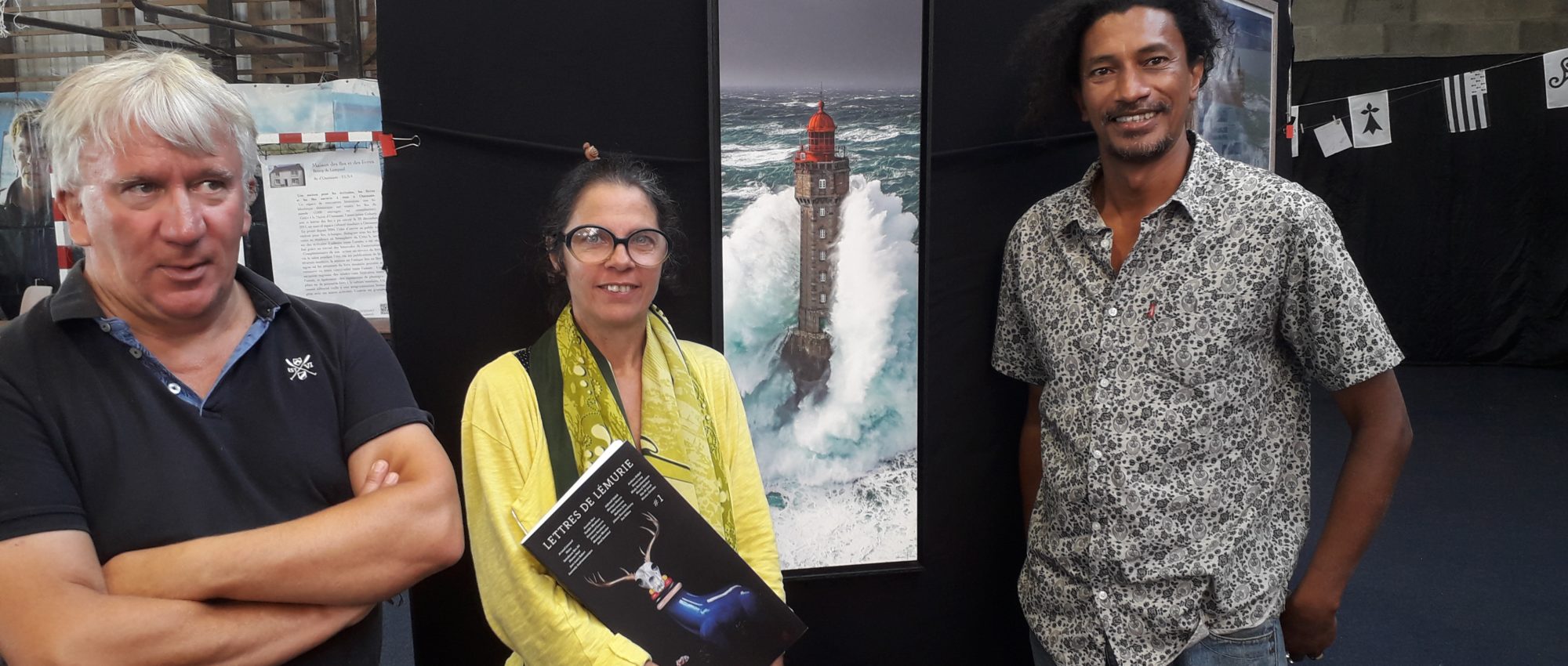
Photo : Denis Palluel, président de l’AIP en compagnie des auteurs de « Lettres de Lémurie ».
Les îles du Ponant s'est dotée d'une grande ambition : offrir un avenir aux îles de l'Atlantique et de la Manche. Pour cela son objet premier est le maintien de territoires abritant des communautés insulaires actives et attractives. L'AIP (Association des Îles du Ponant) intervient dans les domaines des finances, des services publics, de l'aménagement du territoire, de l'agriculture, du tourisme, de l'environnement, de l'urbanisme, de la culture et est reconnue comme l'interlocutrice privilégiée des pouvoirs publics pour les questions insulaires...
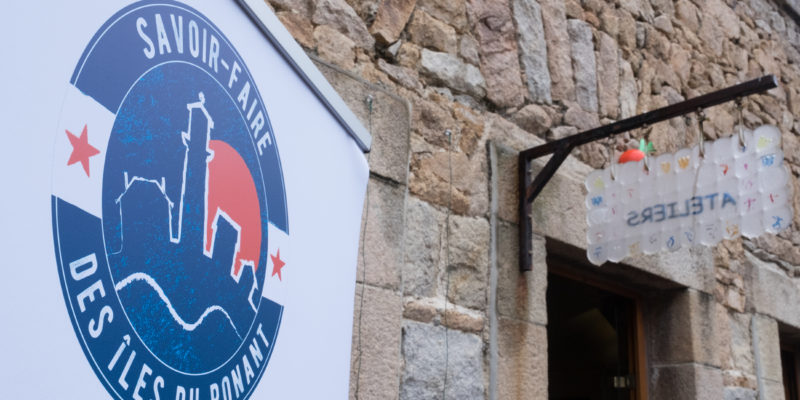
Pour valoriser les entrepreneurs des îles du Ponant, nous avons créé la marque "Savoir-faire des îles du Ponant" qui garantie le caractère véritablement insulaire d'un produit ou d'un service et fera la promotion des entrepreneurs insulaires qui créent des emplois à l'année sur leurs territoires.
Qu'ils soient agriculteurs, restaurateurs, hôteliers, artisans ou artistes : tous ont à coeur de promouvoir le savoir-faire insulaire et de participer au développement économique de leur île.
Site réalisé grâce au financement du Conseil Régional de Bretagne, du Conseil Régional des Pays de la Loire, des départements des Côtes d’Armor, du Finistère, du Morbihan et de Vendée.